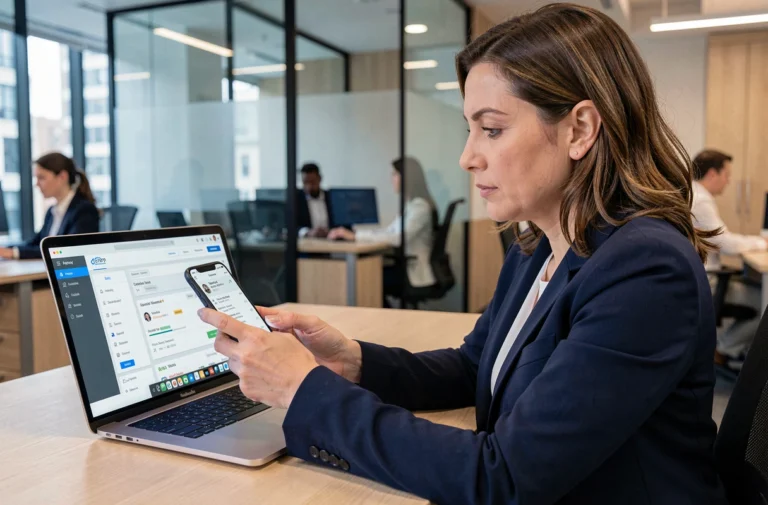
With the rise of digital technologies, companies are constantly looking for innovative solutions to optimize their productivity and simplify their internal processes. One of the recurring questions that HR managers ask concerns the integration of a digital time tracking system into the existing payroll management. Managing time and attendance poses a major challenge, and digitalization promises significant gains in terms of accuracy and efficiency. However, the transition to these new methods raises questions: how can we ensure that the adaptation of these tools does not lead to additional complications in the current payroll management?
Digital Innovation in Time Management
The adoption of digital technologies in time tracking represents a major evolution compared to traditional methods. The shift to digital systems is often seen as a significant advancement for companies looking to modernize their operations.
- Improved Accuracy: digital systems minimize human errors, which are often unavoidable when using manual methods.
- Accessibility and Flexibility: employees can log their hours from any connected device, providing real-time visibility for managers.
- Data Analysis: these tools offer detailed reports that help understand trends and improve planning.
Compatibility with Existing Payroll Systems
The integration of a digital time tracking system into an existing payroll system requires a thorough analysis of compatibilities and necessary adjustments to ensure a smooth transition.
The compatibility of software systems is often a major concern. Companies must ensure that their current systems can effectively communicate with the new time tracking technologies. For example, a robust payroll software must be able to synchronize the data collected in real-time by the tracking tool.
It is essential to check the customization and interoperability options offered by these systems. Solutions must be flexible enough to adapt to the specific needs of each company while complying with existing legal and regulatory frameworks.

The Challenges of Integration
The integration of new technologies is never without challenges. Several aspects must be considered to ensure a smooth transition process.
- Employee Training: ensuring easy and quick adoption by all staff to avoid disruptions in daily operations.
- Data Security: protecting sensitive employee information is a priority, especially with the use of online platforms.
- Initial Cost: initial investments can be high, but must be weighed against potential savings achieved through process optimization.
- Change Management: proper support for teams is essential to accept and adopt these new practices.
Implementing a digital time tracking system may seem like a complex task, but it is manageable with adequate planning and appropriate resources.
The integration of a digital time tracking system into existing payroll management represents a significant opportunity for operational improvement for any company ready to take on this challenge. Although the path may be fraught with obstacles, the potential benefits in terms of accuracy, efficiency, and employee satisfaction are considerable. By approaching integration with a thoughtful strategy and relying on flexible technological solutions, companies can truly transform their human resource management and enhance their competitiveness in the market.