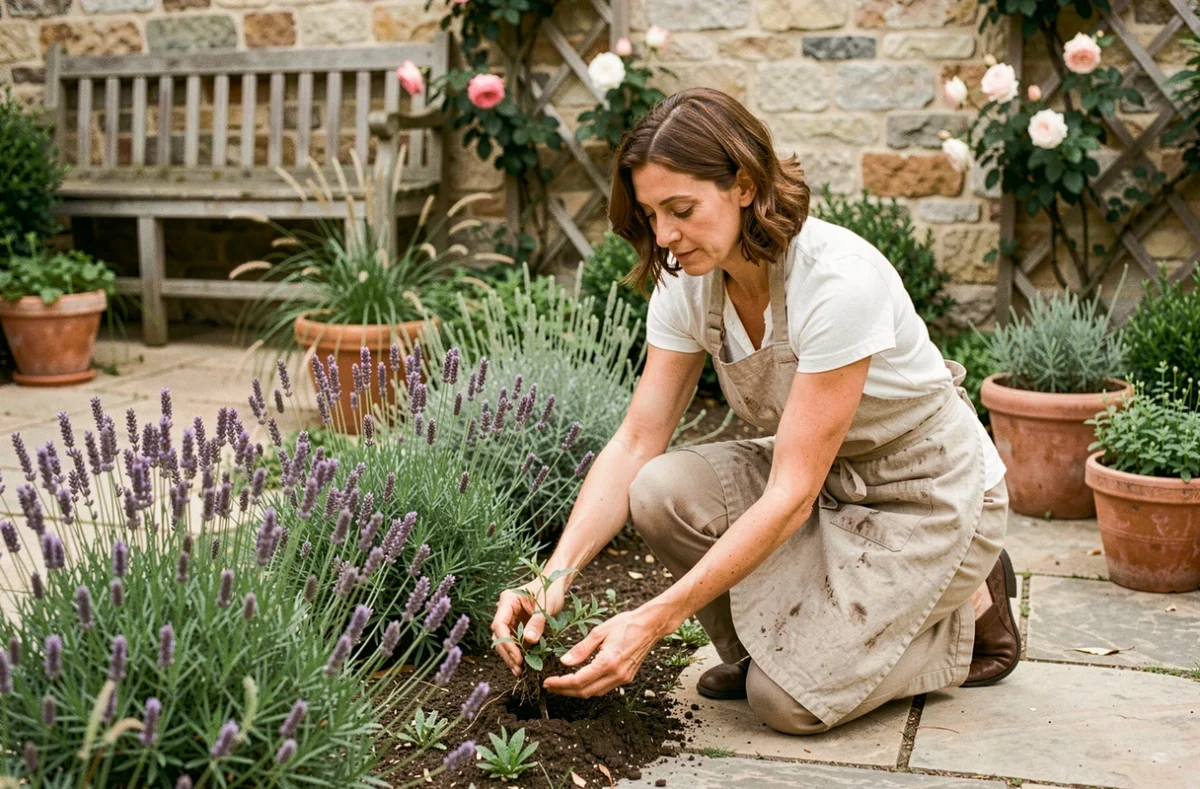
Creating a harmonious garden means taking measurements before planting. Sun exposure, soil type, available space, and watering rules set by the local authority all influence the choice of plants and materials. Comparing these factors helps avoid costly mistakes and focus the budget on the features that truly transform an outdoor space.
Regulations and climate: two essential considerations before landscaping
Competitors rarely address the legal framework. France’s decree of 27 December 2018 regulates light pollution from outdoor lighting, including in private parks and gardens. Installing decorative spotlights without checking local requirements could mean having to bring them into compliance later.
Water restrictions add a factor that is often overlooked in landscaping plans. According to the Nord prefecture, the rules depend on the area and the restriction level in force, which can be checked on the Vigieau platform. A prefectural order may ban watering lawns and flower beds or limit watering hours for vegetable gardens.
A garden designed to look charming but unable to withstand a dry summer quickly loses its appeal. Taking lighting regulations and water restrictions into account from the outset points towards sustainable choices: plants suited to the local climate and surfaces that need little watering.
Specialist resources can help you explore planting schemes that take these constraints into account: https://jardindhelena.be/ offers ideas suited to different soil types and sun exposures.
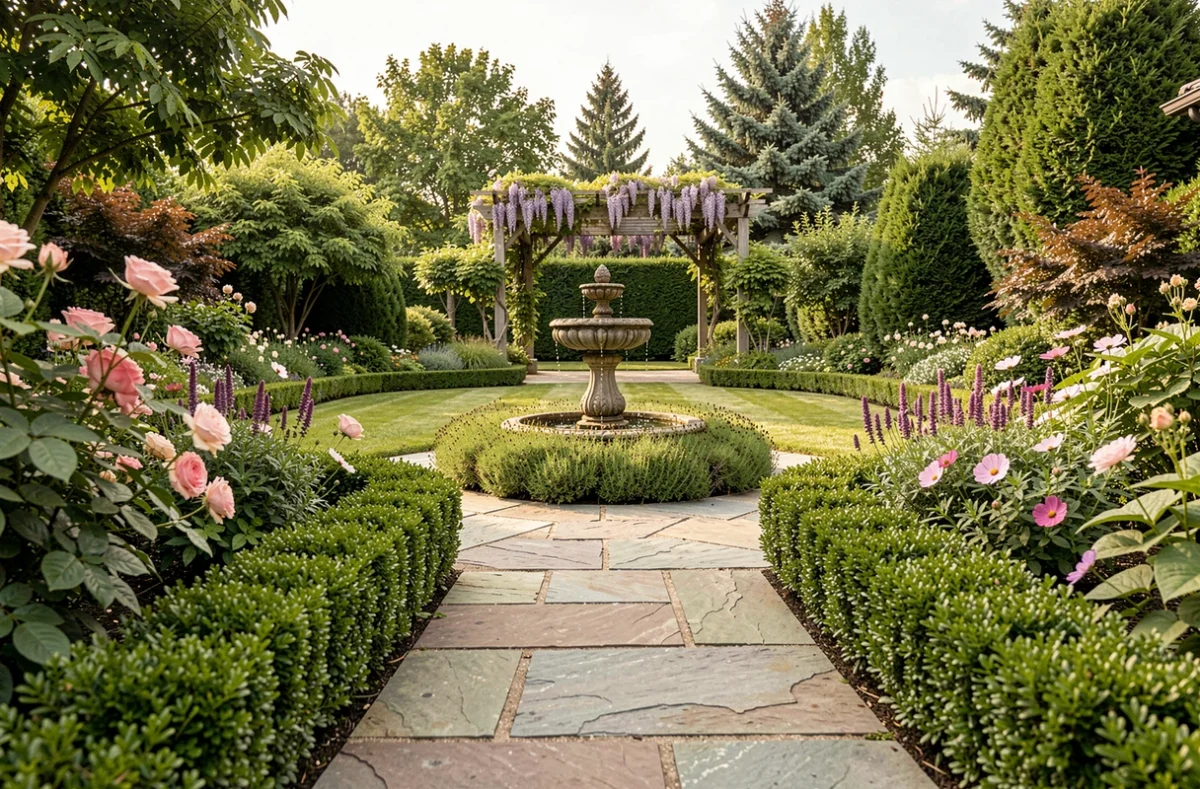
Soil, sun exposure and space: comparing plant and material choices
Before choosing a style, compare the characteristics of your plot with the options available. The table below compares three common garden types and the trade-offs they involve in terms of plants, materials and maintenance.
| Criteria | Sunny garden, well-drained soil | Shady garden, clay soil | Small urban space (courtyard, large balcony) |
|---|---|---|---|
| Recommended plants | Lavender, rosemary, ornamental grasses | Hostas, ferns, hellebores | Climbing plants, compact shrubs |
| Ground materials | Gravel, natural stone, composite decking | Raised paving slabs, stepping stones | Outdoor tiles, decking on joists |
| Watering needs | Low with Mediterranean plants | Moderate (the soil naturally retains moisture) | Variable, often hand-watered |
| Main maintenance tasks | Annual pruning, weeding | Drainage, moss control | Repotting, fertilising container plants |
| Risk of watering restrictions | High in areas with summer restrictions | Low (the soil retains moisture) | Moderate (watering pots is often permitted) |
Soil type affects maintenance costs just as much as aesthetic choices. A garden with clay soil needs less water but may require drainage work to prevent waterlogging in winter. By contrast, a well-drained plot in full sun is ideal for drought-tolerant plants, provided you forgo a water-hungry lawn.
Outdoor lighting: create atmosphere without causing nuisance
Lighting can turn an ordinary garden into a charming space after dark. It is tempting to add more and more lights: string lights, solar bollards and tree spotlights. This approach raises two practical issues.
The first is regulatory. The decree of 27 December 2018 sets requirements for the duration and intensity of outdoor lighting. Occasional, downward-facing lighting is more likely to comply with the regulations than high-intensity lighting left on all night.
The second is ecological. Lights left on all night disrupt nocturnal wildlife, including pollinating insects, bats and migratory birds. Treating lighting as something to use occasionally rather than as permanent decoration changes the way a garden is designed.
How to choose garden lights
- Choose a warm colour temperature (below 3,000 kelvins) to reduce insect attraction and preserve the atmosphere
- Use motion sensors or timers to prevent lights from staying on all night
- Direct light towards the ground to reduce light pollution and comply with the 2018 decree
- Choose solar-powered lights where sun exposure allows, eliminating the need for wiring and reducing energy use
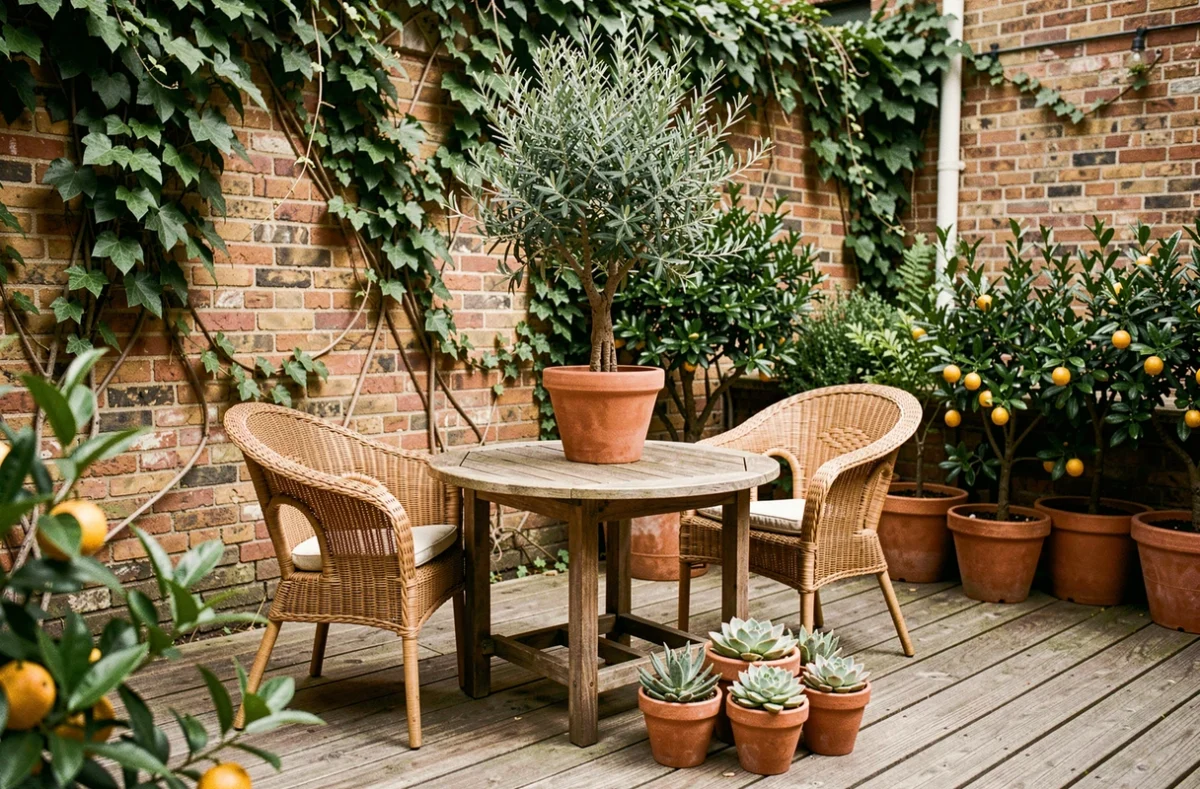
Organising garden areas: patio, flower beds and pathways
A charming outdoor space depends on clearly defined areas. In most gardens, three zones are enough: a living area (patio or dining space), a planted area (flower beds, hedges or vegetable garden) and a pathway connecting the two.
The patio sets the direction for the rest of the garden design. Its position depends on sun exposure: face it south to enjoy the sun in spring and autumn, or place it beneath an existing tree for natural shade in summer. Common materials such as wood, composite decking and stone vary in maintenance costs and durability in bad weather.
Flower beds work best at varying depths rather than as a uniform strip along a fence. Plants of different heights—ground cover at the front, medium-sized shrubs in the middle, and climbers or small trees at the back—create perspective and make the space look larger.
Paths and walkways: connect areas without dividing them
An overly wide or straight path can look rigid. Irregular stepping stones, a gently curving gravel path or simply a strip of mown grass between two flower beds can guide both the eye and your steps.
A comfortable garden path should be at least around 80 centimetres wide. Any narrower and it becomes difficult to get around, especially with a wheelbarrow or garden cart. Wider than 120 centimetres, and it takes up too much usable space in a small garden.
Edging serves a practical as well as an aesthetic purpose: it keeps gravel from spreading into flower beds and stops lawn roots from creeping into borders. Corten steel, treated wood and reconstituted stone edging can all complement different garden design styles.
A harmonious garden does not need a long list of ideas; it needs every choice, from lighting to edging, to address a real feature of the plot. Water restrictions and lighting regulations have become design considerations, just like sun exposure and budget. Ignoring them means creating an outdoor space that starts to deteriorate after the first dry summer or the first inspection by the local authority.